Showing posts with label Brew Notes. Show all posts
Sunday, 16 September 2018 0 comments

Brew Notes: Biere de Miel

Literally “honey beer”, little is actually recorded about this as a style per se. Rather, it most likely represents a variation of a farmhouse beer using whatever adjuncts or ingredients in hand. I was inspired by Jester King Brewery’s take on this beer (a sour), as well as a non-sour honey beer I tasted on tap at Temple Cellars.

At the same time, I had 2 cultures that were waiting for me to try out - Lachancea thermotolerans and Pichia apotheca. L.thermotolerans received a fair bit of media publicity as it is an yeast that produces lactic acid. A strain was reportedly isolated from bees/wasps/something like that, and an attempt made to patent it in commercial brewing. The downside though, is the fermentation temperature - although its specific name is “thermotolerans”, it dies at temperatures above 18C. (What a wuss!) 

P. apotheca is another interesting yeast, very kindly sent to me by the good folks at the University of Washington. It was first isolated from an aged beer, and later found to be an yeast new to science that is of hybrid origins. The lead researcher of the paper tells me that pure fermentation’s using P. apotheca was disappointing, so I decided to use this as part of an alternative, non-Brewer’s yeast (Saccharomyces) beer. 

Biere de Miel’s grain bill was designed to be simple. I wanted to eventually have it as a tart, clean and rather dry beer with floral and honey nuances. Pilsner Malt should contribute a backbone of malt sweetness, while wheat malt provides residual dextrins to support some body. I decided to go with a single varietal honey - Eucalyptus. I bought this stuff during a visit to my sis’ in Melbourne, and it had been patiently waiting in line to star in either a mead or a beer. The honey was added only at flameout and again for secondary fermentation, so as to preserve the volatile aromatics. Likewise, I used noble hops for this brew for their floral qualities. Finally, the beer was aged on French oak staves to lend restrained vanilla and woody notes for contrast and interest.

Grain Bill
71% Pilsner malt
14% Wheat malt
3% Honey malt
1% Carafa Special III
10% Eucalyptus honey
Hops 
20g Galena @ 30mins
20g Tettnanger @ flameout
20g Hallertau Mittelfruh @ flameout 
Secondary Additions 
0.25kg Eucalyptus honey
Medium+ Toast French oak
Yeast
Pichia apotheca - Initial fermentation for 3 days
Lachancea thermotherans - Primary fermentation, 2 weeks

Poof!
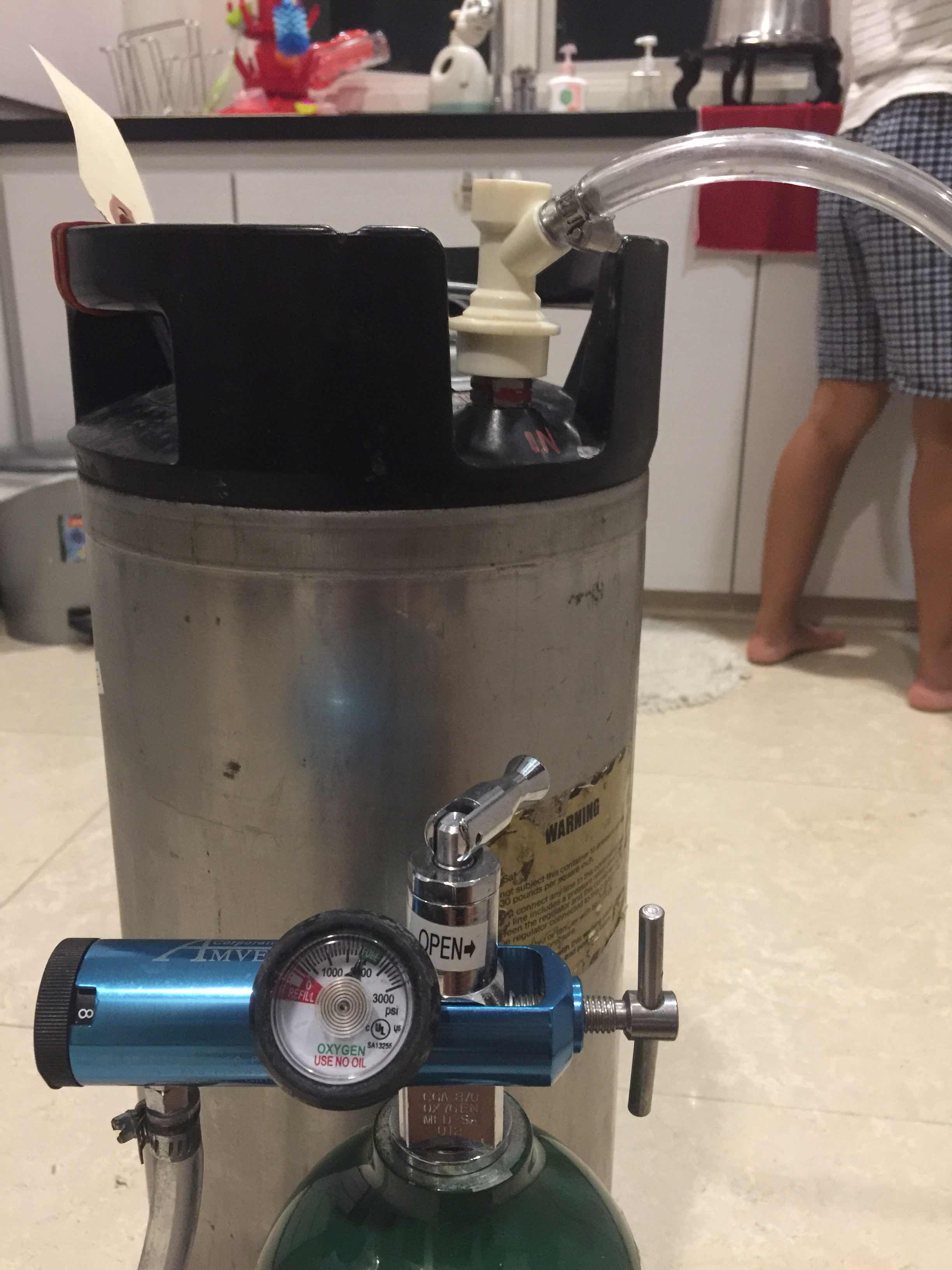
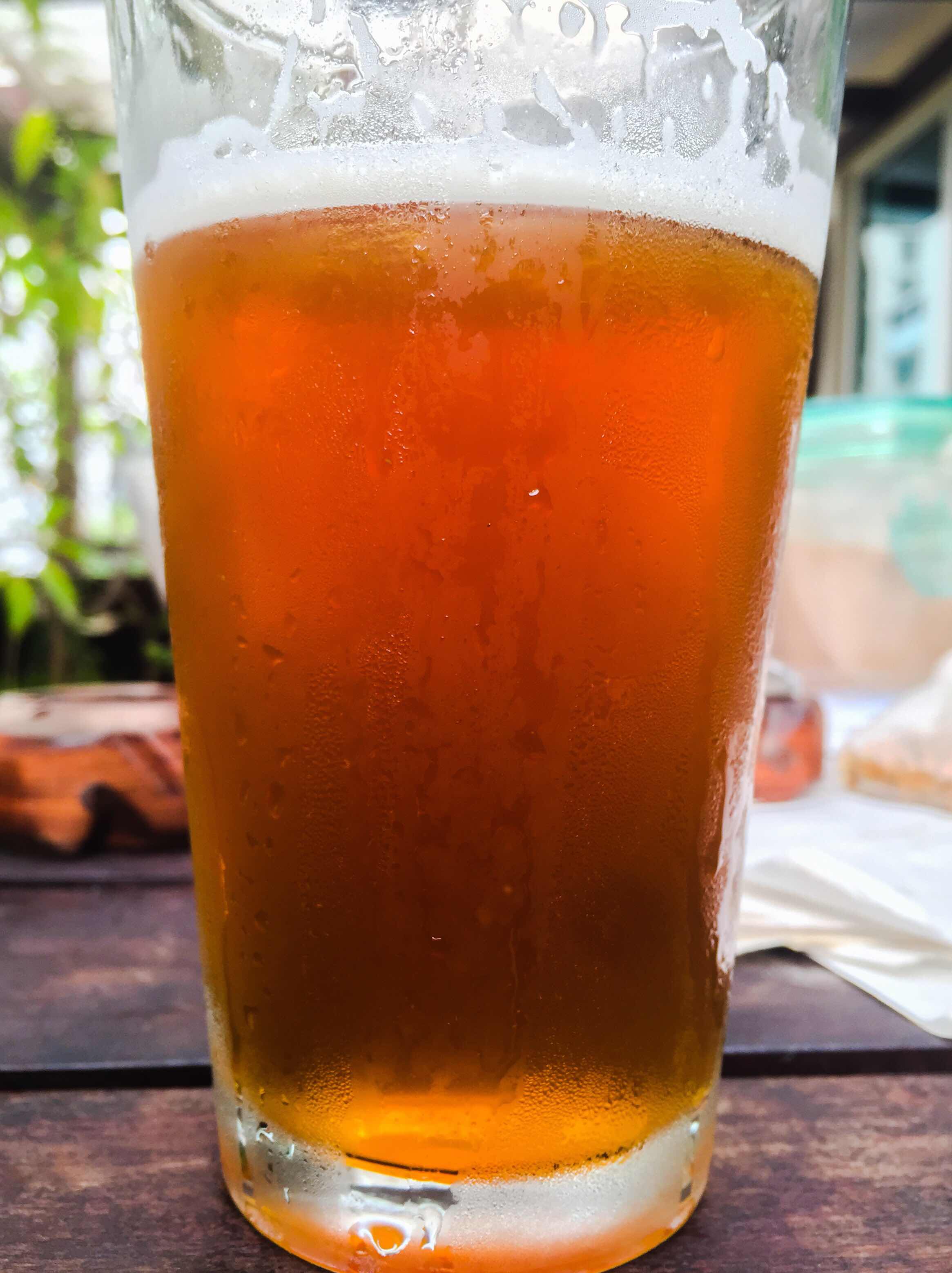
 So I left the wort unattended for a few days, due to unforeseen issues - my P.apotheca culture kept getting destroyed by people at home who knocked it over. By the time I was ready to pitch both P. apotheca and L. thermotolerans, the keg was over-carbonated. I believe I had injected it with pure O2 before that, which led to this - but I'm not too sure. In any case, the wort tasted like wort. No off-flavours, no phenols, no sourness, so I cleaned up the mess and pitched the yeast. 


Image may contain: indoor

L.thermotolerans chugged along like a beast at 17C! On a sneak tasting 2 weeks in, I'm a little disappointed by the apparent sourness.



Thursday, 12 July 2018 0 comments

Brew Notes: Floral Menace

Floral Menace is the first of my 2 perpetual blends - a modified solera system, where a percentage of beer from a maturation vessel is drawn every year and topped up with fresh, unfermented wort.

This beer is brewed with a Saison-esque base, and fermented with DeWayne Schaff’s Mud King blend. Mud King is an interesting blend of wild-captured yeasts contributed by various people, and from a whole range of (largely floral) sources like dandelions and such. I took a risk with a rather aggressive hopping rate (for a sour beer), and thankfully the lactic acid bacteria (LAB) in Mud King appeared to be hop-tolerant! 


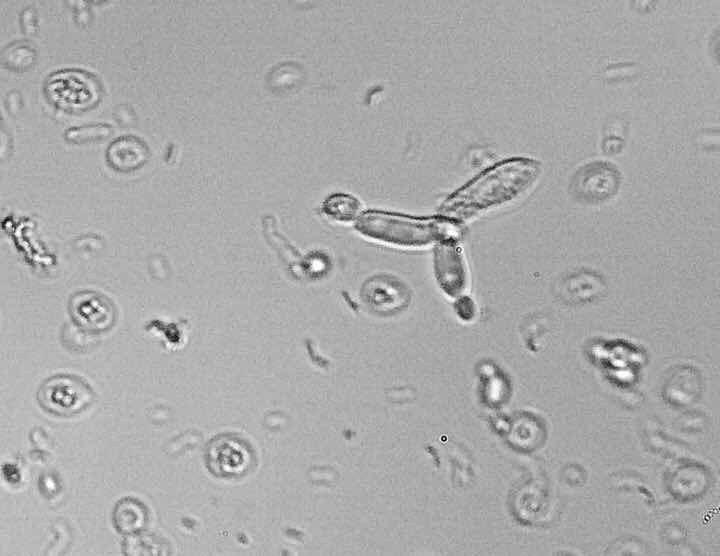
A quick look under the scope showed plenty of yeast cells, bacilli and what appears to be Dekkera/Brettanomyces.

Grain Bill:
69% Pilsner Malt
10% Maris Otter
5% Carapils
5% White Wheat (unmalted)
5% Acidulated Malt
4% Oats
2% Crystal 60
Hops:
14g Motueka @ 60 mins
14g Citra @ 60 mins
14g Motueka @ 15 mins
Mash Temp: 64.5C
Yeast: Mud King
Pitching Temp: 18C
Fermentation Temp: 20C
Secondary Temp: 30C


The culture took off like a bomb, and aggressively brought pH down despite the high hopping rate. 

Tasting notes: (3 months aging)
Only a very mild whiff of funk on the nose, mainly fruity esters and floral notes together with a suggestion of acidity. Very effervescent (primed and bottle conditioned to 3.5 volumes CO2 in sturdy champagne bottles!) and respectable amount of head for the level of acidity. Colour is a glowing, burnished copper, fairly good clarity.

A fairly complex mix of fruity esters and phenols to the taste - predominantly mild cherry-like notes with floral/honey overtones, and underlying earthiness with no significant band-aid off-flavours. Acidity is prominent and fairly bright. Good mouthfeel that supports the acidity well, without being cloying.

Overall, I'm quite pleased with the Mud King culture - I like that the lactic acid organisms are fairly hop-tolerant, and the yeasts ferment cleanly. The main drawback I feel is the lack of funk and complexity especially in the aroma. This may be due to the low mash temperature, which did not leave much complex sugars for Brettanomyces to process. Also, the tasting was done a mere 3 months into aging - I look forward to having this beer in a year or two!

As for the perpetual blending, I do want to keep this culture going on for a few generations. The current plan is to draw out 50% of each batch for bottling or blending, then topping it up again with fresh but unoxygenated wort.


Saturday, 30 June 2018 0 comments

Brew Notes: Dreams of The Never Never (Petit Saison)

I’ve always loved Saisons. So simple, so much yeast character, yet so difficult to do well. For this brew I decided to work once more with the notorious DuPont saison yeast WLP565. There is just no substitution for the beautiful yeast-driven phenols that this remarkable yeast produces, yet it needs so much TLC to really work its magic. It is known to start off explosively, before totally going dormant and then chug along slowly.

The “petit” part is due to an accident. It was my first brew on my new Grainfather setup, and I totally messed up the mash efficiency. As a result, this beer turned out to be weaker than it was intended to be. That’s fine though - it’s like going back to Saison’s roots as a thirst-quenching beer for tired, dehydrated farmhands. A table beer, just like what I imagine one would be like on a homestead. 


Grain Bill:
72% Pilsner malt
10% Maris Otter malt
5% Flaked oats
5% Carapils
5% Wheat malt
2% Crystal 60L
Hops:
20g Motueka @ 60 mins
20g Motueka @ 15 mins
Additions:
1 tsp Black Pepper
1 tsp orange jasmine seeds
1 tsp
Mash:
65C for 60 mins

Fermentation:
WLP565 - 2L starter
Pitched at 17C for 1 week, then 
19C for 1 week, then 
30C 


[Bottle-conditioned]


[Force-carbonated - a lot clearer]


Tasting notes:
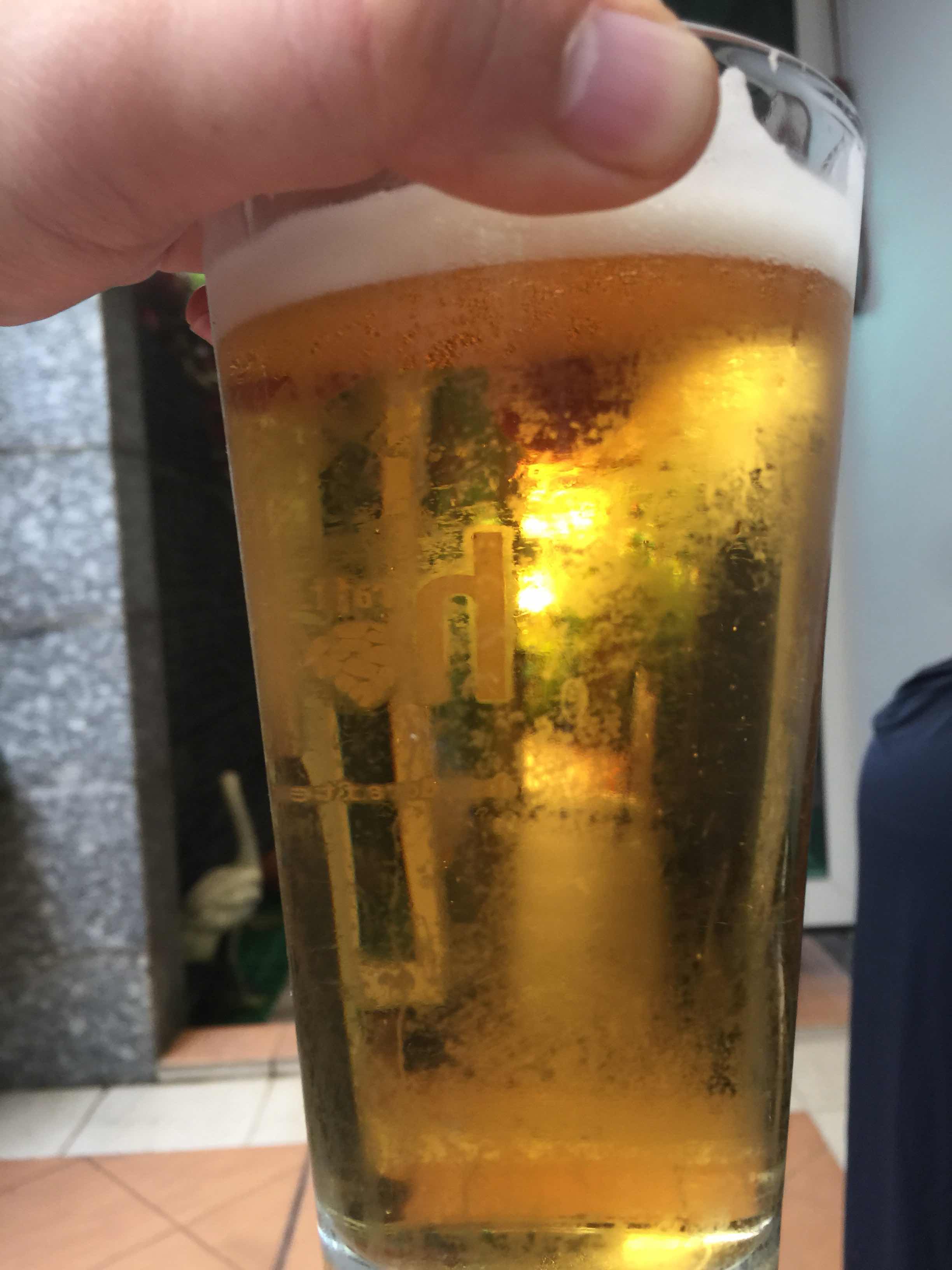
I tasted both the force-carbonated then counter-pressure bottled version, and the other one which was bottle-conditioned. The latter is a tad less carbonated than the force-carbonated version, resulting in beautiful effervescence and a billowy white head. It is also slightly cloudy.

Aroma is beautifully alluring - prominent yeast-driven spice that is sharp and peppery, on a background of fruity esters and earthy phenols. This is what makes this yeast strain great (even though it's a real PITA)!

Mouthfeel is moderately light but not thin, and balanced by a slight prickly acidity but no tartness or sourness. Once again, beautiful phenols predominate and play nicely with the background bitterness. Right at the end, some malt character comes through with bready and mild biscuit notes, before ending with a very satisfying dryness. 


0 comments

Brew Notes: Beer Is A Vegetable (Cream Ale)

The concept for this beer started off with drunken ramblings with some great colleagues and friends - “Beer is made from hops. Hops is a flower. Therefore, Beer is a Vegetable”. Classic!

With this in mind we attempted a brew using reasonable types of “vegetables”. Stuff like celery and broccoli would probably contribute nasty off flavours, so we settled on time-tested brewing adjuncts such as sweet potato, corn and rice instead. These starch-based adjuncts are useful in a cream ale, as they ferment out almost completely to thin out the body and create a lighter mouthfeel. Carrots were meant to be thrown in, but unfortunately in the confusion of the brewday, it was missed out. Also, I accidentally burnt the polenta (corn grits) while chatting animatedly with SQ. 

It was an enjoyable brew day! On top of meeting my friends’ significant other, we totally binged on local food and beer. Due to the nature of my brewing workflow, I could unfortunately only involve them in the hot side of brewing.

Grain Bill
53.1% Pilsner Malt
17.7% Purple Sweet Potato
8.8% Polenta / Flaked Corn
8.8% Flaked Rice
4.4% Flaked Quinoa
3.5% Acid Malt

Hops
20g Tettnang @ 60 mins
20g Hallertau Mittelfruh @ 60 mins

Parameters
Mash Temp 66C
OG 1.051
FG 1.008
Bitterness 19 IBU


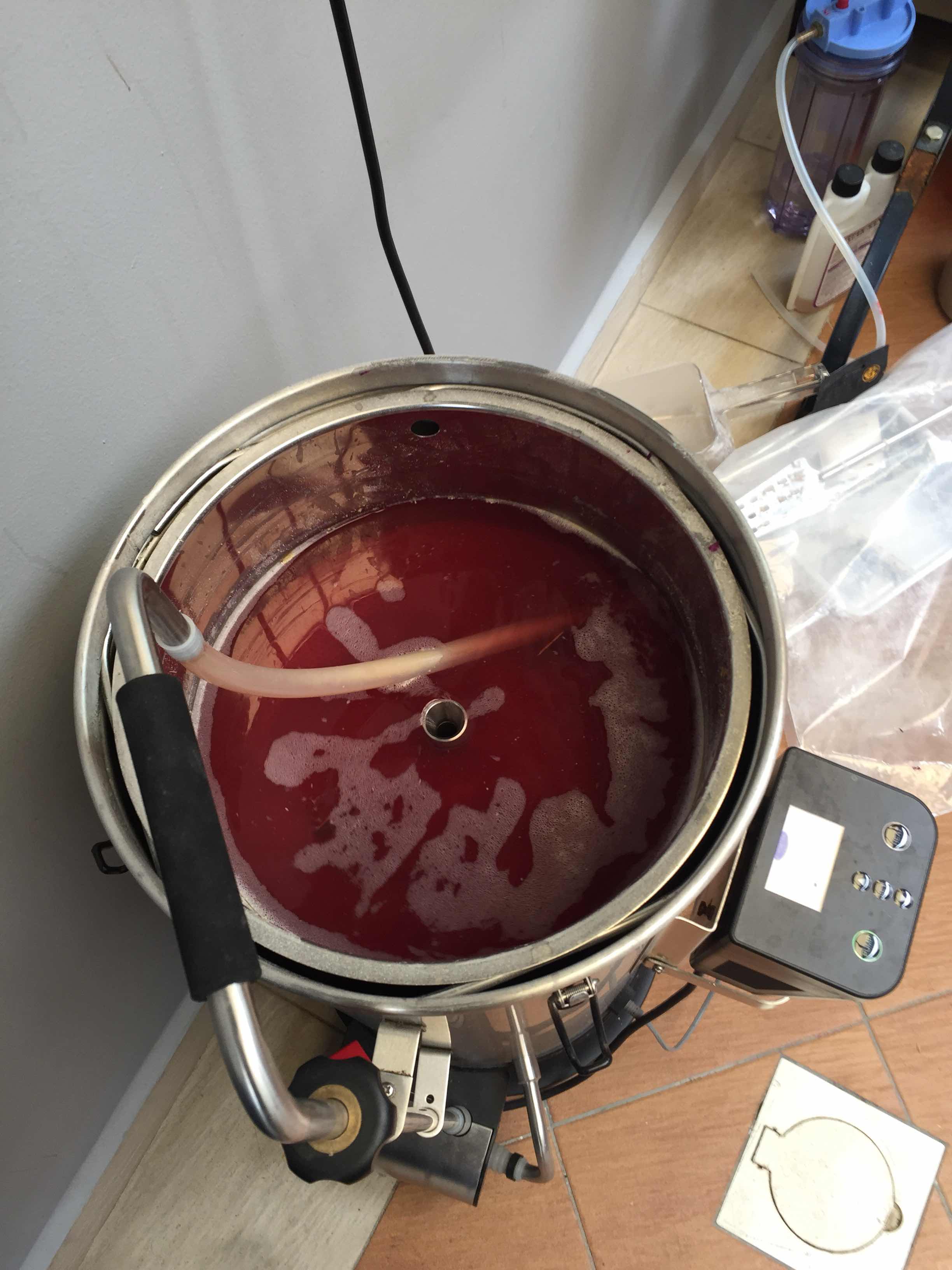
Sweet potato, rice, corn, quinoa - beer is a vegetable, indeed!  


The sweet potatoes (and polenta) were precooked to gelatinization temperatures so that the starch can be converted to sugars later during the mash.


Everyone helped - chopping the sweet potato up to increase surface area! 


Adding to the mash. Due to the very real possibility of a stuck mash due to all those adjuncts, I added 1L (by volume) of rice hulls. 


Yeast & Fermentation
Cream ales are traditionally fermented using ale yeasts at lager-ish temperatures (c.f. steam ales, which are fermented with lager yeasts at ale temperatures). Details aside, what it aims to do is to impart the light crispness of lager yeasts. 

previous triangle taste test by Brülosophy suggested that W-34/70 maintains lager characteristics even when fermented at ale temperatures. For this beer, we actually used a mix of BOTH ale and lager yeasts - US-05 and Saflager W-34/70. (The real reason is because my W-34/70 has doubtful viability, so US-05 was thrown in as insurance!) The keg was hit was pure O2, then fermented at 17C. To prevent unwanted fruity esters from the Saflager 34/70, it was pressure-fermented using a spunding valve at 11 PSI.


To be continued ...
The beer has finished primary fermentation at this point. It is being slowly chilled to lager temperatures, before fining and filtering (aiming for a crystal-clear cream ale, if possible!), and finally lagering at close to freezing. 


Wednesday, 20 June 2018 0 comments

Brew Notes: Pepo - Watermelon Gosé

Gose is one of my favorite beer styles. Tart, briny, effervescent and refreshing - you get the idea. In this little tweak, I wanted to up the refreshment factor by adding the unique notes of fresh watermelon. It didn’t come easy though, and took a few tries to get right. Watermelon is finicky to work with, and the pulp is a nightmare to get out of the beer. 


I’m not a fan of kettle sours (quick souring using Lactobacillus alone) as I find that the end product lacks complexity. However for this recipe I went with kettle souring, as I didn’t have an extra dedicated wild keg on hand. 

A respectable amount of acid malt was added to inhibit proteolysis of foam-forming proteins by the lactic acid bacteria (LAB). Mashing was done as usual, and L.plantarum and L.gasseri was added. The top of the Grainfather was covered in foil, and allowed to ferment at 36C controlled by the heating element. The lactic acid fermentation was stopped when pH dropped to 3.2, with a short 20-minute boil to preserve a light golden colour. 

The yeast strain I used was Voss kveik, originally from The Yeast Bay. I needed to ferment at ambient temperature without control, and I felt that the unique orange-like eaters from Voss will complement the overall character of this Gose. I was not disappointed! At the end of primary fermentation, the frozen and partially-thawed juice of 2 watermelons was added. This was allowed to ferment again to terminal gravity, before being filtered through a nominal 10 micron beer filter and carbonated to 2.5 volumes CO2. 

Batch size 23L
Boil time 20mins 
OG 1.043
FG 1.009
Bitterness 0 IBU (yes I know ...) 
Alcohol 4.6% ABV

Grain Bill:
44% Pilsner Malt 
44% Wheat Malt 
11% Acid Malt 
Hops:
None! 
Additions:
14g sea salt @ flameout 
28g coriander @ flameout 

Yeast & Fermentation:
Lactobacillus plantarum 
Kveik (Voss) 

Secondary:
Juice of 2 watermelons 


[Before filtering - look at those bits of watermelon floating!]

Tasting notes:
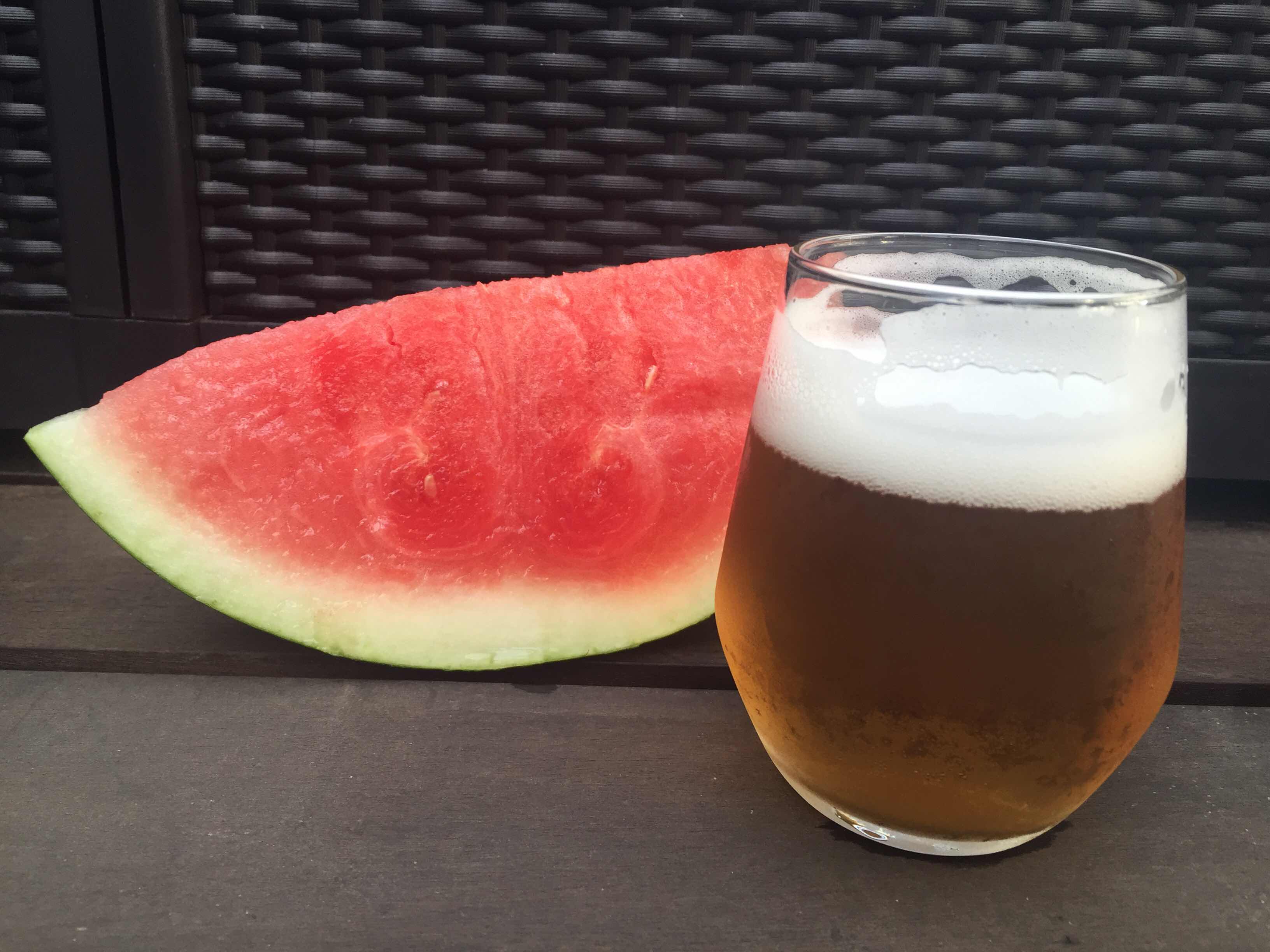
I was expecting some orange notes from the Voss kveik yeast, but that didn't really come through strongly or individually, which is good! Aroma is distinctively of watermelon and in particular, watermelon rind - that refreshing, watery aroma (does that make sense?) that is very much reminiscent of cucumber. Pretty fair head retention which I attribute to pre-acidification, but slightly under-carbonated for style I feel. A good tart acidic note comes through in the aroma, which has some lemon-like qualities. For some reason, the beer dropped sparkling bright - not exactly to style (it ought to be cloudy), but I feel this makes for pleasant visuals in this beer.

Mouthfeel is light, with upfront lactic sourness that is clean and short-lasting on the palate. Once again the taste of watermelon rind is subtle, with not much presence of the watermelon fruit character this time. A slight grainy sweetness is apparent from the Pils malt. Salt presence is barely perceptible and only as a sense of freshness, not unlike that of an electrolyte drink!

In all, I love this beer (and so does my wife). It takes quite a bit of effort to brew however, and in future batches I will experiment with a slightly increased watermelon presence.


Sunday, 10 June 2018 0 comments

Brew Notes: Smoked Maltøl

I wanted to brew something off the beaten track to showcase an amazing yeast strain and celebrate the weird, wonderful world of Nordic farmhouse beers. Traditionally, these were brewed in huge copper kettles for hours, using farm-smoked malt and juniper branches. These beers were enjoyed fresh and often uncarbonated. 

Unfortunately, I do not have access to juniper branches. The Chinese Juniper is supposedly available as an ornamental plant in Singapore, but I’m really not willing to take chances without an expert helping to identify it. 

A bit about the yeast - this is a remarkable yeast from Lithuania, first brought to attention by Lars Garshol and cultured through generations by Julius Simonaitis. Very fortuitously, I was sent a sample of it by fellow brewer and kveik enthusiast DeWayne Schaff in the US. It is reported to have lactic acid bacteria (LAB) in it, though it is not known if this was present in the original culture as used in Lithuania, or simply a contamination by homebrewers. Nonetheless, I’m not going after a tart beer, so for this brew I hopped rather assertively to inhibit LAB. The aim was to create a malt-forward, smoky and rustic farmhouse beer with a deep copper color. 

Batch size: 21L
Boil time: 60mins 
OG 1.063
FG 1.015
Bitterness 27 IBU
Alcohol 6.3% ABV
Mash temp 67C x 60 mins

Grain Bill:
Maris Otter Malt 17%
Pilsner Malt 61%
Wheat Malt 9%
Smoked Malt 9%
Flaked Rye 4% 
Hops:
Chinook 14g @ 60mins
Chinook 14g @ 15mins

Yeast & Fermentation:
Kveik (Simonaitis) @ 30C


Tasting notes:
Deep reddish-copper, fair head retention and lacing. Very obvious smoke presence and sweet maltiness. Low carbonation, contributing to a substantial mouthfeel. The beer is sweet, with fruity esters and phenolic notes. A unique dimension of umami was present - it’s almost like diluted Marmite! 

I’m not sure where the umami came from - most likely the Simonaitis kveik yeast, and highlighted by the smoke and sweetness. Apparent attenuation was surprisingly low (72% AA) for this beer even though mash temperature was not that high. This apparent attenuation was repeated and found to be similar in a Forced Ferment Test done recently. The experience of other brewers suggest that Simonaitis kveik attenuated well into 80-90% AA. The kveik yeast was pitched from a third-gen yeast cake - it went through a high IBU Saison first, then a Double IPA before that. I’m not sure if this had stressed and mutated the yeast, or if I had unwittingly selected for highly-flocculent populations of the yeast. I will be restarting a new generation of this yeast from a slant and frozen culture just to see. 

This is not the most easy-drinking of beers. Mrs Wife refuses to have anything to do with it, citing a feeling of drinking liquid bacon/barbecue sauce. If I were to brew this again, I’d make the following tweaks:
  • Mash lower at 65C for a thinner body
  • Use a more subtle smoked malt instead (maybe apple-smoked malt) but at the same % 
  • Get rid of the rye - it’s plenty complex already, and the rye spice is completely overwhelmed. 
  • Increase the % of Maris Otter to accentuate a more breast/biscuity malt profile (here I’m imagining a farmhouse ale brewed with leftover stale bread, almost like a kvass!) 
  • Add a small quantity of dried juniper berries 
 
;